
Skip to content

Cart

Your cart is empty

Wonderful Pomegranate Tree

The World’s Most Popular Pomegranate — Ready for Your Garden

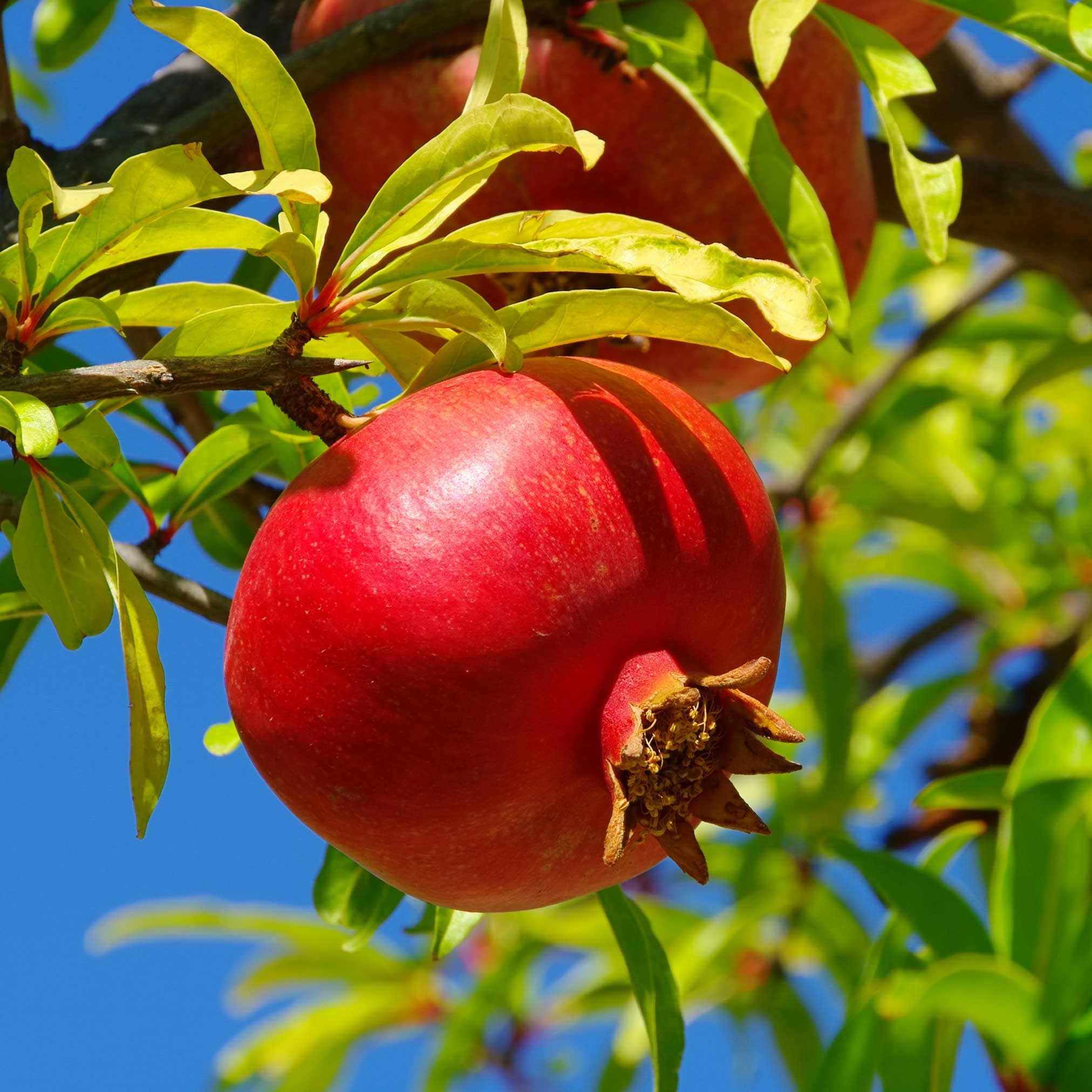
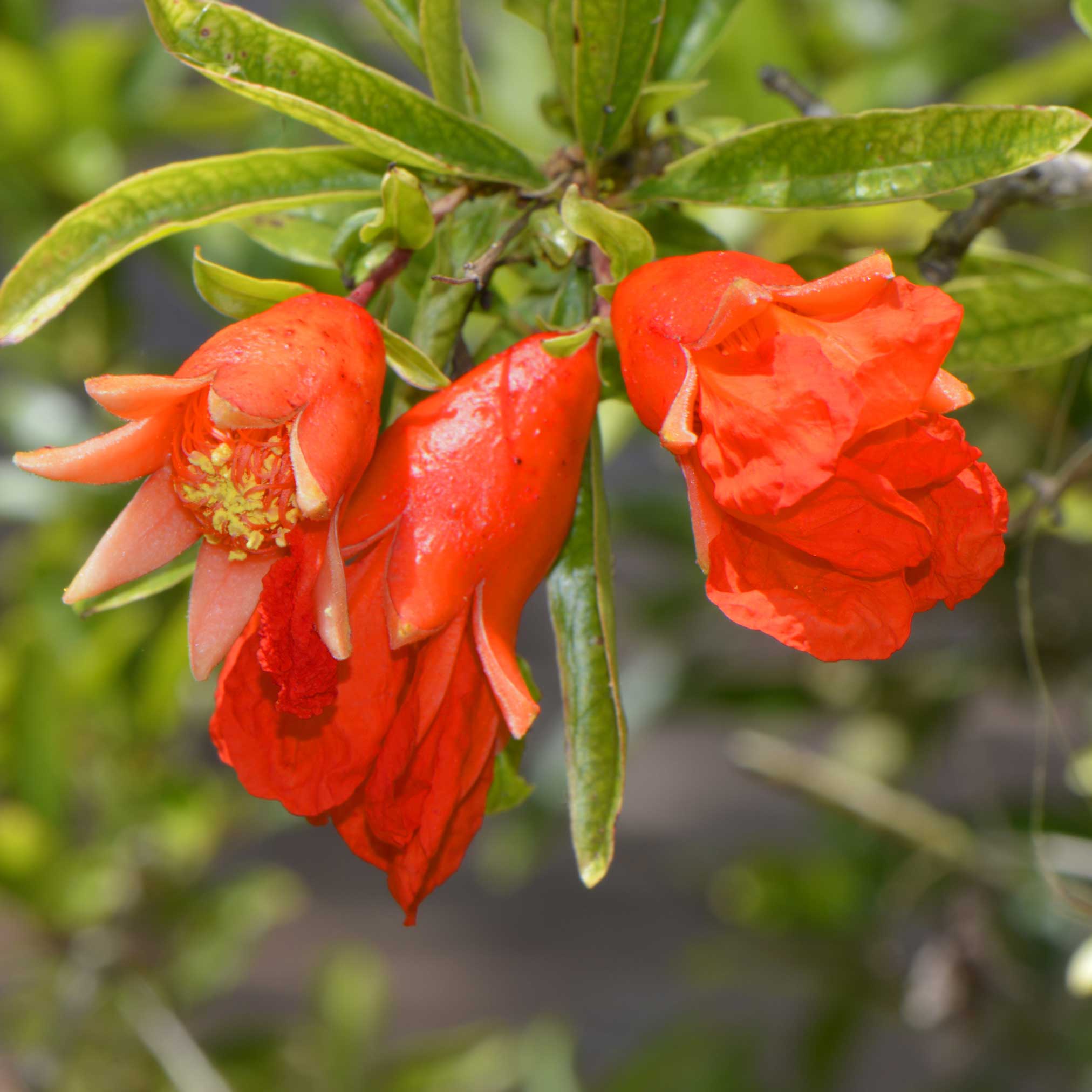
The 'Wonderful' Pomegranate (Punica granatum 'Wonderful') is the gold standard of pomegranate varieties — the same cultivar grown commercially for Pom Wonderful juice and sold in grocery stores worldwide. In your own garden, it delivers everything that makes pomegranates extraordinary: brilliant orange-red blooms in spring, glossy foliage through summer, and heavy clusters of deep ruby-red fruit in fall, each bursting with sweet-tart, antioxidant-rich arils. It’s one of the most rewarding and low-maintenance fruiting trees you can grow.

Why Gardeners Choose 'Wonderful' Pomegranate

  • Exceptional fruit quality — large, deep red pomegranates with rich, sweet-tart flavor; the benchmark variety for taste and juice content
  • Stunning ornamental value — brilliant orange-red blooms in spring; glossy green foliage; striking red-gold fruit in fall
  • Drought-tolerant once established — one of the most water-efficient fruiting trees available; thrives in hot, dry climates
  • Long-lived and productive — pomegranate trees can produce fruit for 200+ years; established trees fruit more heavily each season
  • Deer-resistant — the leathery skin and tannin-rich foliage deter deer browsing
  • Versatile landscape use — works as a specimen tree, espalier, large container plant, or informal hedge/screen

Hardiness & Growing Zones

  • USDA Hardiness Zones: 7–11 (in-ground); zones 5–6 with container growing and winter protection
  • Zone 7: Hardy in-ground; may experience some dieback in severe winters — plant in a sheltered, south-facing location; mulch heavily around the base
  • Zones 8–9: Ideal conditions; vigorous growth with heavy fruit production; the classic pomegranate climate
  • Zones 10–11: Thrives in heat; fruit ripening may extend into winter; requires a brief cool period (below 45°F) for best fruit set
  • Zones 5–6: Grow in a large container (15–25 gal); move to a frost-free garage or basement when temperatures drop below 15°F
  • Sunlight: Full sun (8+ hours required for best fruit production and sweetness)
  • Soil: Adaptable to most well-drained soils; tolerates clay, sandy, and alkaline conditions; avoid waterlogged sites
  • Mature size: 12–20 ft tall × 12–15 ft wide if unpruned; easily maintained at 8–12 ft as a multi-trunk tree or espalier
  • Fruit harvest: Late September–November; fruit is ready when it makes a metallic sound when tapped

Planting & Care Tips

Plant in the sunniest, warmest spot available with excellent drainage. Water deeply during the first two growing seasons to establish a strong root system, then reduce frequency — established pomegranates are remarkably drought-tolerant. Fertilize lightly in early spring with a balanced fertilizer; avoid excess nitrogen, which promotes foliage over fruit. Prune in late winter to remove suckers and crossing branches; pomegranates fruit on new growth, so light annual pruning encourages productivity. Fruit typically begins in year 2–3 and increases significantly by year 5.

Available Sizes

  • 1 Gallon — most economical starter; great for container growing
  • 2 Gallon — well-rooted young tree; faster establishment
  • 3 Gallon — strong root system; ready to take off in the landscape
  • 1–2 ft. (3G) — compact specimen; ideal for espalier or container
  • 3–4 ft. (3G) — established young tree; 1–2 years ahead of smaller sizes
  • 4–5 ft. (3G) — near-mature specimen; may fruit in first or second season
  • 5–6 ft. (3G) — large specimen; immediate landscape presence
  • 6–7 ft. (3G) — largest available; maximum head start; may fruit first season after establishment

Questions & Answers

Have a Question?

Be the first to ask a question about this.

Ask a Question
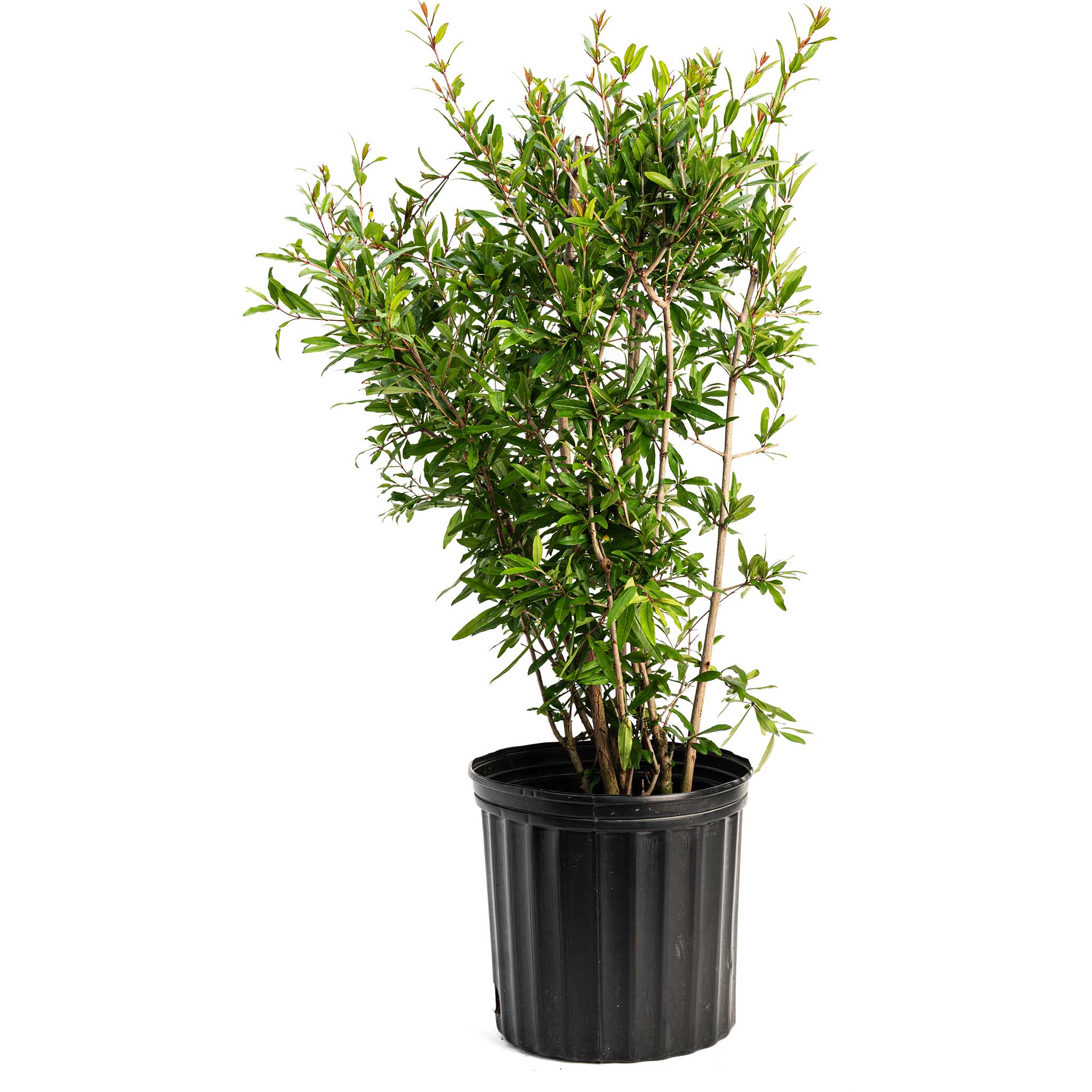
Potted plant with green leaves in a black pot on a white background - Henderson Garden Supply
Wonderful Pomegranate Tree Sale price$ 139.95

You may also like

Recently viewed