
Skip to content

Cart

Your cart is empty

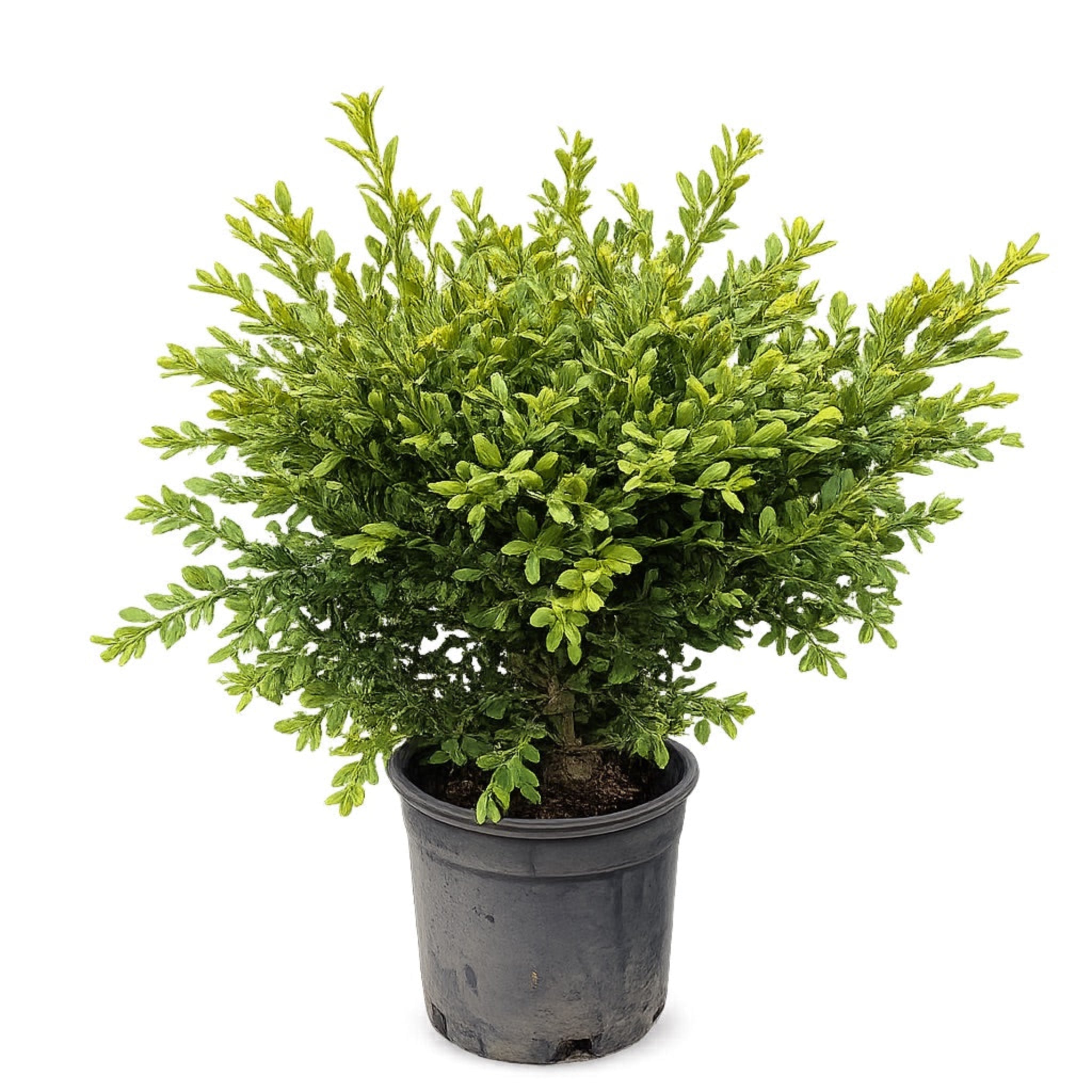
Wilson Northern Charm™ Boxwood (Buxus)

The Cold-Hardy Boxwood That Stays Beautiful Through Northern Winters

Wilson Northern Charm™ Boxwood (Buxus 'Wilson') was bred specifically to address the most frustrating problem with boxwood in cold climates: winter burn. Traditional boxwood varieties — especially English boxwood (B. sempervirens) — frequently suffer from desiccation and browning in cold, windy winters, leaving unsightly damage that takes months to recover. Wilson Northern Charm™ was selected for exceptional cold hardiness and outstanding winter burn resistance, maintaining its handsome appearance through challenging northern winters where other boxwoods struggle. Its foliage adds an additional layer of seasonal interest: emerald-green with a distinctive bluish cast during the growing season, transitioning to rich bronze-green and deep black-green tones in winter — a color shift that provides year-round visual interest rather than the dull, static appearance of many evergreens. Its compact, oval-rounded habit is naturally tidy and requires minimal shaping to maintain a polished, formal appearance.

Why Wilson Northern Charm™ Stands Out

  • Outstanding winter burn resistance — the defining trait; bred specifically for cold-climate performance; maintains attractive foliage through northern winters where traditional boxwoods brown and desiccate
  • Exceptional cold hardiness — hardy to zone 4; significantly more cold-tolerant than English boxwood (B. sempervirens), which is typically hardy only to zone 5–6
  • Distinctive seasonal color shift — emerald-green with a bluish cast in summer; transitions to bronze-green and deep black-green in winter; year-round visual interest beyond static green
  • Compact, naturally tidy oval habit — uniform, dense form that requires minimal shaping; ideal for formal hedges, borders, and foundation plantings
  • Excellent light adaptability — performs well in full sun, filtered sun, and partial shade; one of the most adaptable boxwoods for varied site conditions
  • Good growth rate — establishes attractive hedges and plantings more quickly than slow-growing boxwood varieties
  • Easy to transplant — transplants well for greater planting flexibility
  • Container-friendly — grows well in large containers for patios, entryways, and formal outdoor spaces

Hardiness & Growing Zones

  • USDA Hardiness Zones: 4–8
  • Zones 4–5: The defining advantage of Wilson Northern Charm™; fully cold-hardy with outstanding winter burn resistance; plant in a location with some protection from harsh desiccating winter winds for best results
  • Zones 6–7: Ideal conditions; vigorous growth with excellent year-round foliage color and form
  • Zone 8: Performs well; provide afternoon shade in the hottest climates; consistent moisture during summer heat is important
  • Sunlight: Full sun to partial shade (full sun with adequate moisture produces the most compact, dense form; partial shade is well-tolerated)
  • Soil: Well-drained; boxwood is sensitive to root rot in waterlogged conditions; avoid low spots and heavy clay without amendment; slightly acidic to neutral pH (6.0–7.0)
  • Mature size: 3–4 ft tall × 3–4 ft wide; compact oval-rounded form
  • Hedge spacing: Plant 2–3 ft apart for a dense formal hedge; 3–4 ft apart for a more relaxed border

Planting & Care Tips

Plant in well-drained soil in full sun to partial shade. Avoid low-lying areas with poor drainage — root rot in waterlogged soil is the primary cause of boxwood decline. Water consistently during the first growing season; once established, boxwood is moderately drought-tolerant. Mulch 2–3 inches around the base (keeping mulch away from the trunk) to retain moisture and regulate soil temperature. Fertilize once in early spring with a balanced slow-release fertilizer. Prune in late spring after new growth has hardened off, and again lightly in late summer if needed. In exposed northern sites, a burlap windscreen in winter can further reduce winter burn on the most exposed sides.

Note on boxwood blight: Boxwood blight (Calonectria pseudonaviculata) is a fungal disease affecting boxwood in many regions. To reduce risk: avoid overhead watering, ensure good air circulation, sanitize pruning tools between plants, and avoid working with wet foliage. Check with your local extension service for current blight pressure in your area.

Available Sizes

  • 1 Gallon — most economical; ideal for planting in quantity for hedges, borders, and mass plantings
  • 3 Gallon — larger, more established plant; faster to full hedge and screening effect

Questions & Answers

Have a Question?

Be the first to ask a question about this.

Ask a Question
Potted coniferous plant on a white background - Boxwood - Henderson Garden Supply
Wilson Northern Charm™ Boxwood (Buxus) Sale price$ 59.95

You may also like

Recently viewed