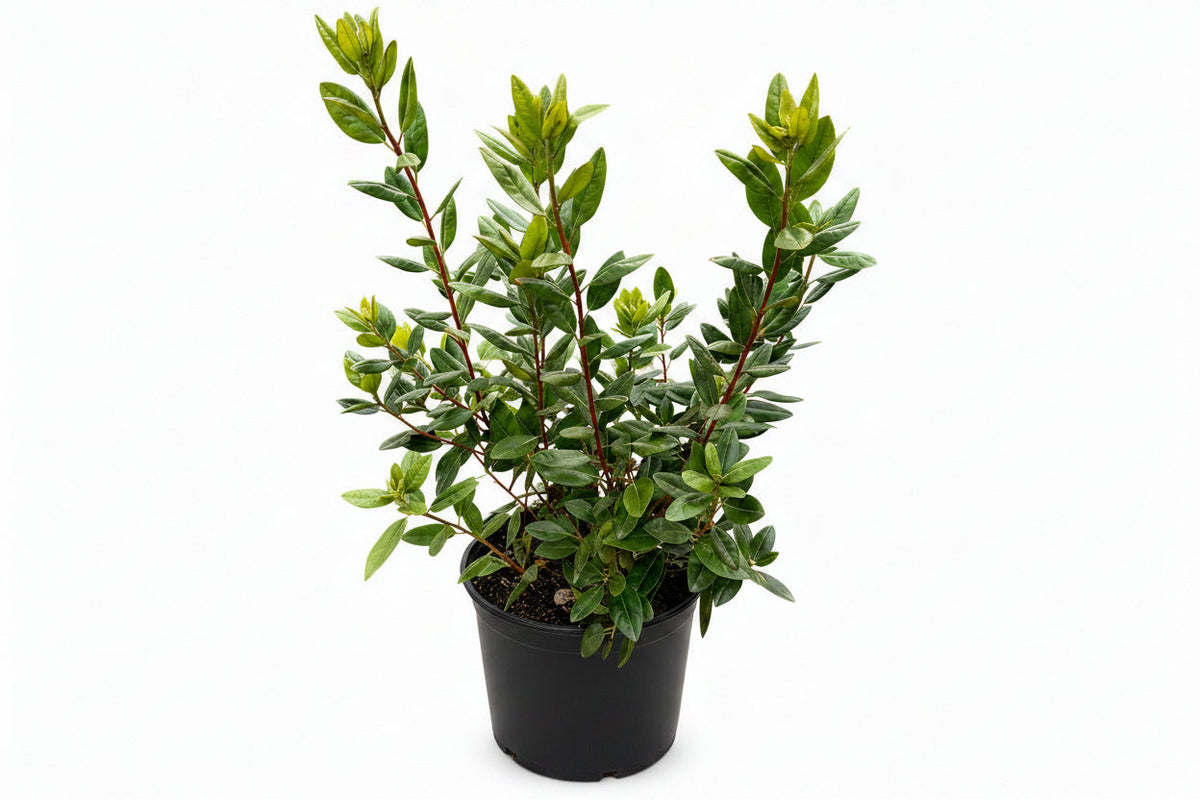
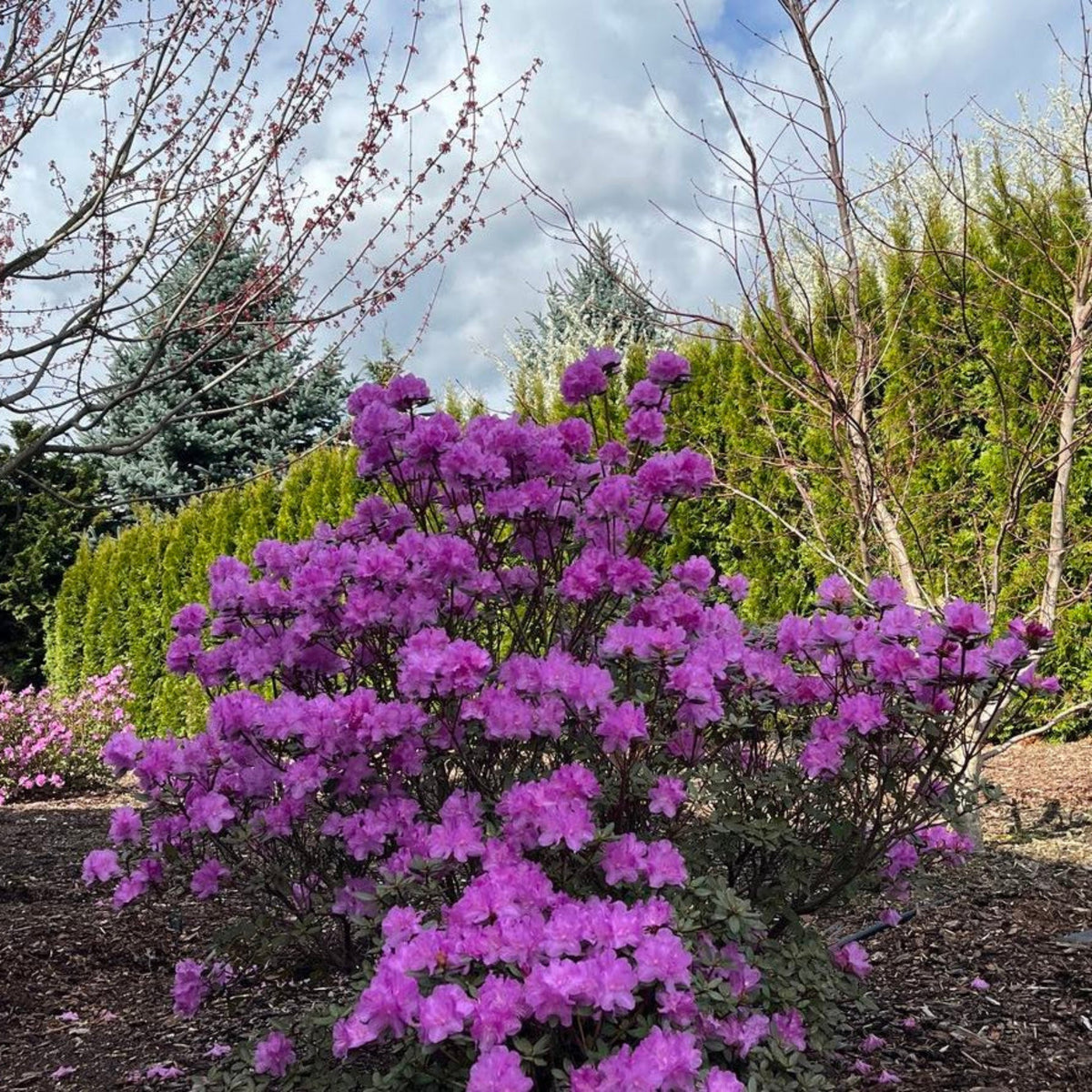
PJM Rhododendron: Spring Flowers & Rich Winter Foliage
PJM Rhododendron brings clusters of lavender-purple spring flowers and small evergreen leaves to sheltered borders and woodland-style gardens. As temperatures cool, foliage can develop rich mahogany tones, adding another season of interest beyond the flowering display.
Picture its spring flowers brightening a garden beneath high, open shade, followed by textured green foliage and deeper winter color. With appropriate soil and moisture, it makes a useful evergreen accent without needing to be the tallest plant in the border.
Why Choose PJM?
-
Spring flower clusters: Lavender-purple blooms provide a colorful seasonal focal point.
-
Evergreen foliage: Adds leafy texture after flowering.
-
Winter color: Cool temperatures can deepen leaf tones; exact appearance varies by site and season.
-
Cold-hardy hybrid background: PJM rhododendrons were developed for winter hardiness.
-
Versatile garden form: Suits mixed borders, grouped plantings, and sheltered specimen locations.
Growing Zones, Identity & Size
-
USDA zones: 4–8, following Missouri Botanical Garden's PJM Group reference.
-
Planning size: Approximately 3–6 feet tall and 3–7 feet wide for the group, depending on selection, age, and conditions.
-
Selection note: PJM refers to a group of related hybrids. A named selection such as ‘PJM Elite’ is not identified for this listing, so group-level dimensions are used rather than assuming a specific cultivar.
-
Space: Allow room for the mature spread rather than treating every PJM as a miniature foundation shrub.
Light, Soil & Water
-
Light: Dappled or high, open shade; morning sun with afternoon shade is suitable. More sun may be tolerated in cool northern summers, but hot afternoon exposure can scorch leaves.
-
Soil: Acidic, organically rich, moisture-retentive but well drained. Missouri Botanical Garden gives a general pH preference of approximately 5.0–5.5. Test soil before choosing amendments.
-
Water: Keep the shallow root zone evenly moist, not waterlogged. Do not allow roots to dry out completely.
-
Drainage: Poor drainage raises root-rot risk. Consider a properly designed raised planting where heavy soil makes drainage difficult.
-
Shelter: Protect from strong, drying winter winds.
Available Nursery Sizes
Choose 1 Gallon or 3 Gallon. These are offered nursery-container sizes, not mature dimensions or guaranteed delivery heights. Flowers at delivery and first-season bloom are not guaranteed.
Pruning & Ongoing Care
If shaping is needed, prune after flowering. Remove spent flower clusters carefully if desired. Mulch helps retain moisture and stabilize soil temperature; keep the crown clear and avoid cultivating around shallow roots.
Avoid overwatering and overfertilizing. Winter hardiness does not make this shrub maintenance-free or immune to heat stress. Good site selection matters more than a broad claim that it tolerates every summer condition.
Container care: Use an acidic growing mix, adequate root space, and drainage holes. Monitor moisture closely and plan winter root protection where needed; in-ground hardiness ratings do not guarantee equivalent survival in an exposed pot.
Safety: Rhododendrons are ornamental, not edible. Keep plant material away from children and pets that may chew plants.
Choose PJM Rhododendron for spring color and evergreen texture where acidic soil, reliable moisture, and protection from harsh exposure can be provided.