Skip to content

Cart

Your cart is empty

Orange Flowering Tea Olive | Fragrant Evergreen

One of the Most Powerfully Fragrant Plants in the World

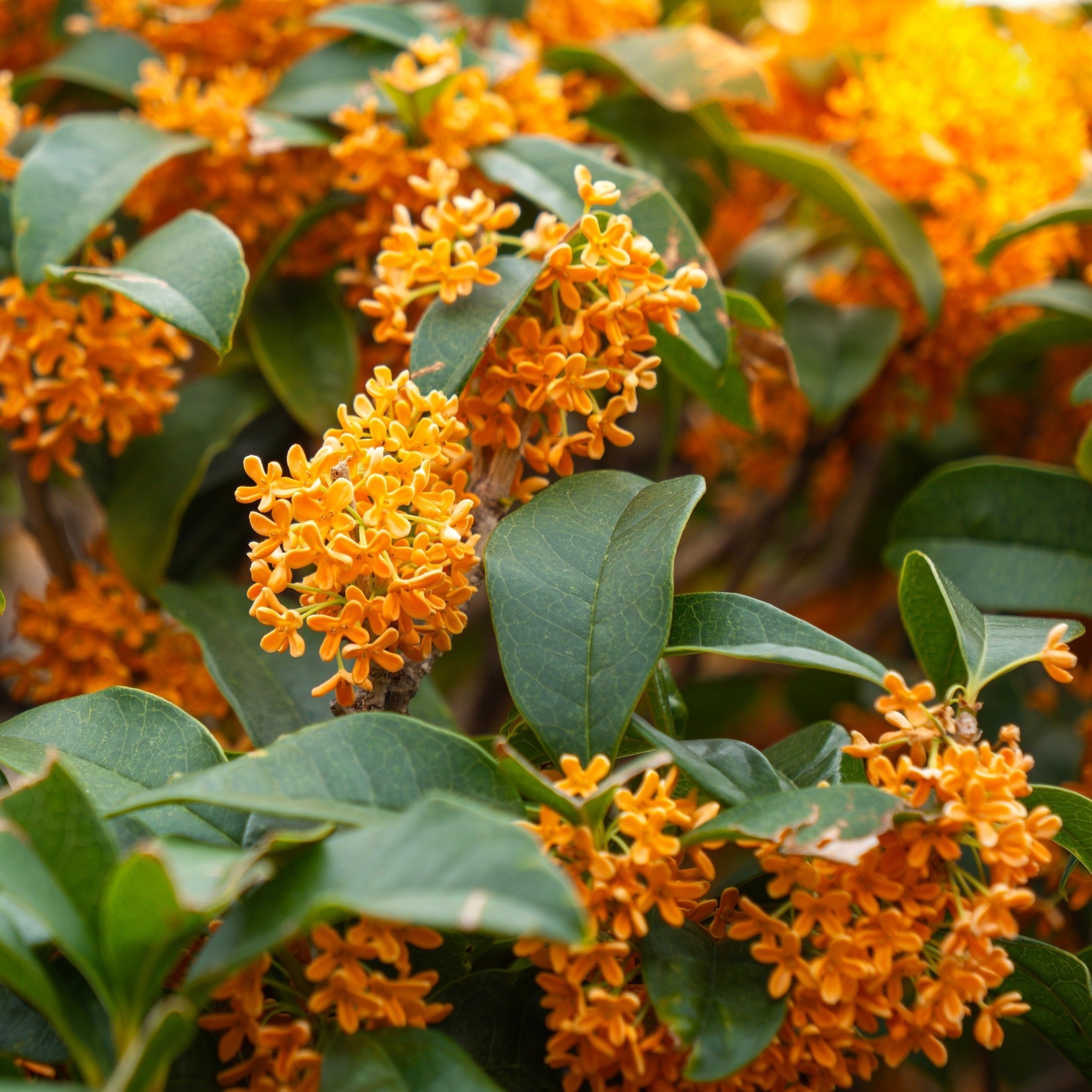
Orange Flowering Tea Olive (Osmanthus fragrans f. aurantiacus) is not a plant you smell — it’s a plant you experience. Its tiny, apricot-orange flower clusters are modest in size but extraordinary in fragrance: a rich, sweet, apricot-peach scent so intense it can perfume an entire garden from a single plant, and so distinctive that it stops people in their tracks to search for the source. In China, where it has been cultivated for over 2,500 years, the fragrance of Osmanthus is considered one of the ten most beautiful scents in the world. It blooms most heavily in fall and again in spring, with sporadic flowering through mild winters — delivering fragrance precisely when most other plants have gone quiet. Its dense, glossy dark-green evergreen foliage provides year-round structure and privacy screening, making it as functional as it is extraordinary.

Why Orange Tea Olive Stands Apart

  • Extraordinary fragrance — among the most intensely fragrant plants available; sweet apricot-peach scent carries remarkable distances from a single plant
  • Fall and spring blooming — blooms most heavily in fall (September–November) and again in spring (March–April); sporadic flowering through mild winters; fragrance when most plants are dormant
  • Dense, glossy evergreen foliage — deep green, lustrous leaves provide year-round structure, privacy screening, and backdrop planting
  • Deer-resistant — osmanthus is generally avoided by deer; a reliable choice in landscapes with deer pressure
  • Versatile landscape use — works as a specimen, privacy hedge, espalier on walls and fences, foundation planting, or container plant for patios and entryways
  • Pollinator-friendly — fall and spring blooms provide nectar when few other plants are flowering
  • Long-lived and low-maintenance — extremely durable once established; drought-tolerant; requires minimal pruning

Hardiness & Growing Zones

  • USDA Hardiness Zones: 7–11
  • Zone 7: Hardy in-ground; plant in a sheltered location with protection from harsh north and west winds; foliage may bronze slightly in severe winters but recovers; flower buds may be damaged by hard freezes below 10–15°F
  • Zones 8–9: Ideal conditions; vigorous growth with prolific fall and spring blooming; the classic tea olive climate
  • Zones 10–11: Thrives year-round; may bloom nearly continuously in the mildest climates
  • Sunlight: Full sun to partial shade (full sun produces the most prolific blooming; tolerates shade better than most flowering shrubs)
  • Soil: Well-drained, slightly acidic to neutral (pH 6.0–7.5); adaptable to clay, loam, and sandy soils with good drainage
  • Mature size: 10–15 ft tall × 6–10 ft wide if unpruned; easily maintained at 4–8 ft with annual pruning
  • Bloom time: Fall (September–November) and spring (March–April); sporadic through mild winters

Planting & Care Tips

Plant in well-drained soil in full sun to partial shade. Water consistently during the first growing season to establish a strong root system; once established, tea olive is quite drought-tolerant. Fertilize once in early spring with a balanced slow-release fertilizer. Prune lightly immediately after the spring bloom flush to shape and control size — avoid heavy pruning in fall, which removes the upcoming fall flower buds. Tea olive is one of the most low-maintenance fragrant shrubs available and rarely requires pest or disease management.

Available Size

  • 3 Gallon — well-rooted young shrub; will establish quickly and begin blooming within 1–2 seasons

Questions & Answers

Have a Question?

Be the first to ask a question about this.

Ask a Question
Close-up of orange flowers with green leaves - Henderson Garden Supply
Orange Flowering Tea Olive | Fragrant Evergreen Sale price$ 89.95

You may also like

Recently viewed