Black Beauty® Elderberry: Dark Foliage & Fragrant Pink Blooms
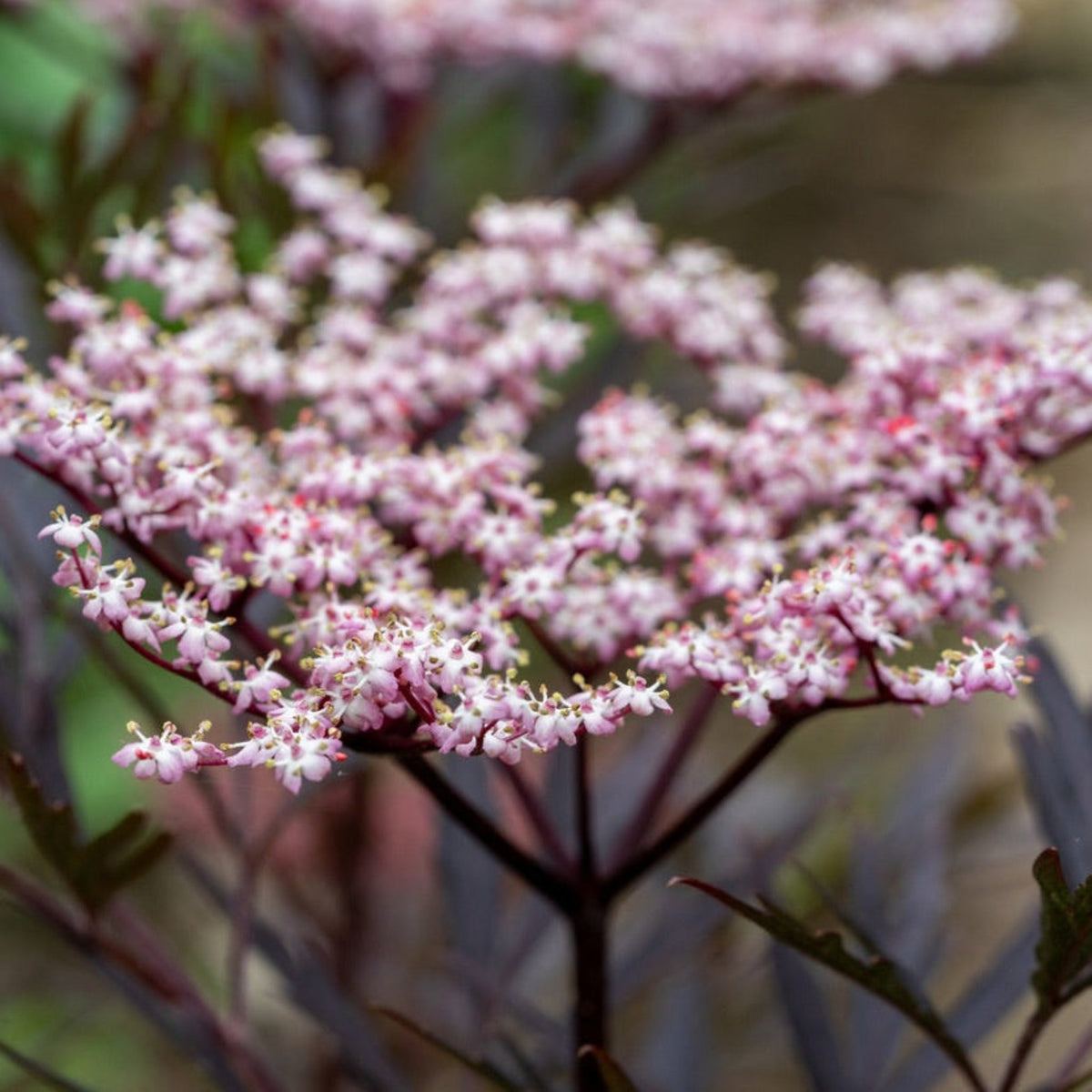
Black Beauty® Elderberry (Sambucus nigra ‘Gerda’) brings bold purple-black leaves and large clusters of pink flowers to the landscape. Its early-summer blooms have a sweet anise scent, adding fragrance to a shrub grown as much for foliage as for flowers.
Picture its dark leaves behind silver foliage or bright perennials, giving a mixed border depth and contrast. With room to reach its full size, it makes a striking specimen or a leafy seasonal screen.
Why Choose Black Beauty®?
-
Dramatic foliage: Purple-black leaves create contrast with green and silver planting partners.
-
Pink early-summer flowers: Large, fragrant clusters add another seasonal highlight.
-
Large-shrub presence: Suits spacious borders, groupings, and specimen plantings.
-
Berry potential: A compatible nearby elderberry supports fruit production.
-
Adaptable soil preferences: Tolerates acidic or alkaline conditions, with moist soil preferred.
Growing Zones & Mature Size
-
USDA hardiness: Zones 4–7, following Proven Winners' cultivar-specific guidance.
-
Mature planning size: Approximately 8–12 feet tall and wide. Allow space rather than treating it as a compact foundation shrub.
-
Seasonal habit: Deciduous; leaves drop in winter, so it does not provide evergreen privacy.
-
Foliage color: Best in cool climates. In hot areas, the breeder notes that foliage may be primarily green rather than purple-black.
Pollination & Berry Expectations
For berry production, plant a compatible Black Lace®, Instant Karma®, or Laced Up® elderberry nearby, as recommended by Proven Winners. A second Black Beauty® is not a substitute for a different compatible cultivar. Pollinator plants are not included with this listing.
Fruit production depends on flowering, pollination, plant maturity, and conditions. A particular crop size or first-season harvest is not guaranteed. Choose this ornamental shrub primarily for landscape value rather than a promised fruit yield.
Light, Soil & Water
-
Light: Full sun to part sun.
-
Soil: Moist soil is preferred; acidic and alkaline soils are tolerated.
-
Water: Monitor soil moisture during establishment and dry weather. Some tolerance of dry soil does not make a newly planted shrub drought-proof.
-
Placement: Leave room for the mature canopy and access for ongoing care.
Available Nursery Sizes
Choose 1 Gallon or 3 Gallon. These are offered nursery-container sizes, not mature dimensions or guaranteed delivery heights. Flowers, foliage, and berries at delivery depend on season and plant development.
Pruning & Ongoing Care
Black Beauty® blooms on old wood. If shaping is needed and flowers are a priority, prune immediately after flowering, keeping in mind that removing flowered branches can also remove developing fruit.
The breeder also describes cutting it to the ground annually for foliage-focused perennial-style growth. That approach can sacrifice the old wood needed for the flower and berry display, so choose a pruning strategy that matches your goal.
Feed in early spring if needed with an appropriate tree-and-shrub fertilizer at its label rate. Containers require adequate root space, drainage, closer watering attention, and winter root protection; with an 8–12-foot mature footprint, an in-ground location is generally the simpler long-term choice.
Important Safety Note
Elderberry is not a raw-snacking fruit. Remove leaves, stems, and unripe berries before food processing and follow reliable extension guidance for safe preparation. Keep plant material away from children and pets; Proven Winners warns that elderberry can be toxic to pets if consumed.
Choose Black Beauty® Elderberry for dramatic foliage, fragrant pink blooms, and a bold seasonal presence in a garden with room to grow.